
微信公众平台
小鹏的泪别纸巾,特斯拉的三分糖奶茶……为何温情牌爱翻车?_我的网站

一 |
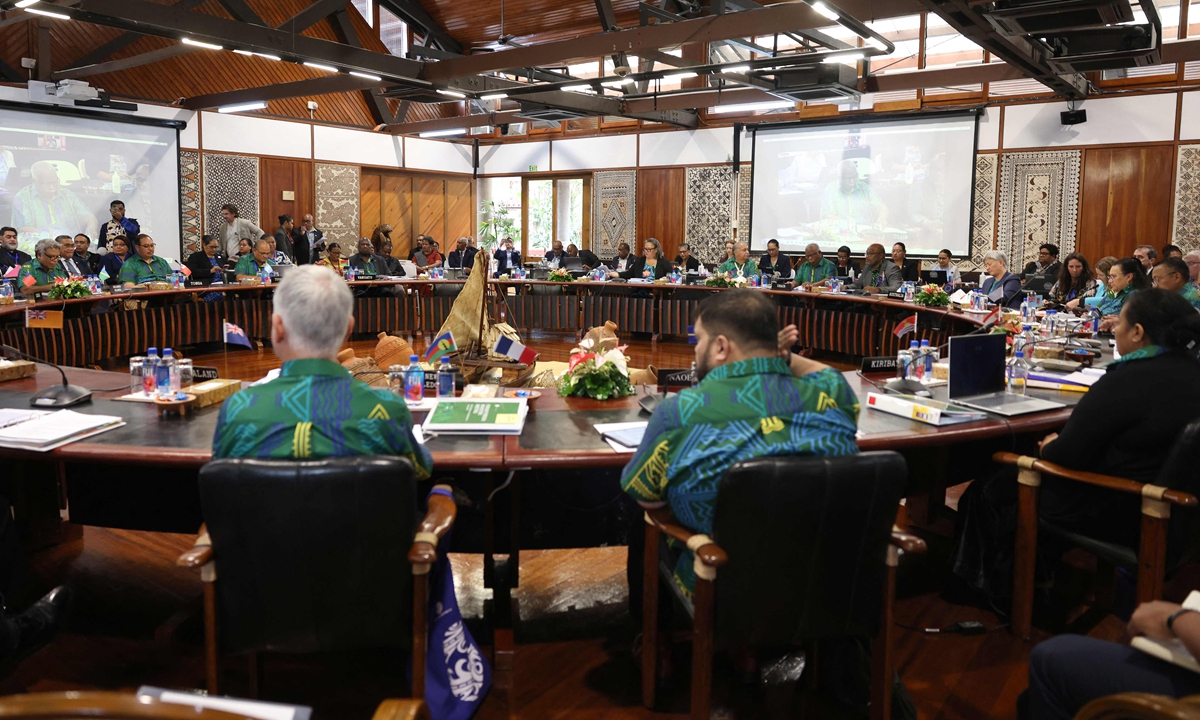
As foreign ministers and senior representatives from Pacific nations convened in Suva for the Pacific Islands Forum (PIF) to discuss key regional issues, New Zealand's foreign minister reportedly pushed to secure a joint statement condemning China's missile tests in July, however, his effort ultimately fell flat. A Chinese expert described the outcome as a clear rebuke to Canberra and Wellington's ingrained habit of speaking for the Pacific, saying the two countries must come to terms with a shifting reality: Pacific Island states are increasingly unwilling to let Australia and New Zealand dictate who their friends, foes and perceived security threats should be.
Pacific Island foreign ministers failed to agree on Friday to a joint response to China's missile launch in July, with further discussions expected at the Pacific leaders meeting at the end of August, said New Zealand Foreign Minister Winston Peters, according to Reuters.
According to a report from Radio New Zealand, there has not been a unanimous statement from Pacific nations about China's test-launch in July, and Peters said New Zealand had been pushing for one. Peters claimed that the Pacific missed an opportunity not to issue a joint statement soon after China's launch.
Australia's Foreign Minister Penny Wong said before the meeting that she hoped China took note of the "very clear response" already sent from the Pacific about the test, according to AFP.
Peters' push for a joint PIF statement on China's missile tests, together with Wong's remarks, are less about technical security concerns than an effort to turn their own anxieties about China into a regional agenda and pressure Beijing under the forum's collective banner. His description of Pacific Island countries' refusal to single out China as a "missed opportunity" also reveals little respect for their independent judgment, Chen Hong, director of the New Zealand Studies Centre, East China Normal University, told the Global Times.
The result is a clear rebuke to Canberra and Wellington's long-standing habit of arrogantly "speaking for" the Pacific, as island states are increasingly unwilling to let Australia and New Zealand decide who their friends, foes or security threats should be, said Chen Hong.
The Chinese People's Liberation Army Navy said on July 6 that one of its strategic nuclear submarines successfully launched a strategic missile toward relevant high seas of the Pacific Ocean, which landed precisely within the designated waters. China notified relevant countries in advance of the test launch, a move that demonstrates the openness and transparency of the Chinese armed forces, Chen Xi, a spokesperson for the Ministry of National Defense, said at a press conference on July 7.
Chen Hong also noted that Peters' recent China-related rhetoric has become increasingly populist and hawkish as elections approach in New Zealand. "Such an approach risks undermining New Zealand's long-standing reputation for pragmatic, independent, and rational diplomacy," Chen Hong said.
In July, during a parliamentary debate on New Zealand's Covid-19 pandemic response, Peters, who is also leader of the populist New Zealand First party, told a Chinese-born lawmaker to "go back to your own country" while mocking his English proficiency. His remarks drew wide criticism in New Zealand.
Yet Australia and New Zealand continued to amplify missile-related issues and great-power rivalry, pushing the "China threat" narrative to the center of the regional agenda while sidelining the priorities that matter most to Pacific Island nations, said Chinese analysts.
Chen Hong noted that for island states, the most urgent concerns are not geopolitical competition but everyday challenges: climate change, energy security, development financing, infrastructure and economic resilience. By shifting the focus from these concerns to strategic rivalry among major powers, Australia and New Zealand risk distorting the region's real priorities and undermining the aspirations of Pacific Island countries.
According to an introduction on the forum website, "The Forum's Pacific Vision is for a resilient region of peace, harmony, security, social inclusion and prosperity, so that all Pacific people can lead free, healthy, and productive lives."
At the opening of the meeting, Rick Houenipwela, foreign minister of the Solomon Islands and chair of the meeting, said that the Pacific's agenda must continue to be "conceived by the Pacific, shaped by the Pacific and only by the Pacific," according to Reuters.
Chen Hong said Pacific Island nations have made their position clear: differences with China do not mean signing up to the strategic agendas of Australia and New Zealand. A growing number of island countries refuse to be trapped in the black-and-white binary choice of siding with either China or the West.
If Canberra and Wellington keep pushing rhetoric beyond the regional consensus, they risk undermining the very institution they claim to support. The PIF's strength lies not in issuing confrontational statements, but in preserving Pacific unity. Turning that consensus into a tool for pressuring China would erode the forum's cohesion and weaken its central role in the region, said Chen Hong.
。

二 | 车主女儿还在纸条写下对G3的不舍和感激,“小鹏,不管天涯海角,我们都是朋友,谢谢你,你贴心为我放音乐,为我父母导航,我即使结交新朋友,也不会忘你,我祝你到新家,快乐、幸福”,还手绘了一张小鹏G3的简笔图。

三 |
何小鹏表示,这件事一天的时间传遍了整个公司。“这张纸条激励了我们很多人,让我们更加坚信,我们做的这件事情是多么的有意义。

四 | 但我们还有很多地方都做得不够好,我们真的还需要更加努力,真正提高所有鹏友的满意度。

五 | 最后想说,鹏友,谢谢你!希望今后的日子G9能够陪伴你走过更美好的人生!”
就是这样一件事,却引发了两种观点的激烈交锋。有人大受感动有人直言“戏太多”纸条的事情是昨天发生的,何小鹏在今天中午就发了一条长长的微博。

六 | 有人发现,何小鹏还买了热推。多种迹象都表明,何小鹏对这件事很上心。
何小鹏描述了很多细节,比如车主女儿现场的泣不成声,又偷偷用纸巾写字作画藏在车里,以及纸巾被发现后一天传遍整个公司。当然这些细节也是引发争议的重要原因。

七 | 有人认为很真实,感动到泪目。不少人指出小孩子就会对旧东西恋恋不舍,这就是天真无邪的感情流露。

八 | 甚至有人提议小鹏可以把这辆车和纸巾留在小鹏的博物馆。在这部分人眼中,小鹏不再是冰冷的机器,而是有感情寄托在里面。何小鹏的最后一段话大意也是表示深受感动和鼓舞,以后会继续努力等等。另一面,是不少人认为这是拙劣的情感营销。之所以会这样说,因为不少人怀疑事情的真实性,还对其中的多处细节提出质疑。首先是买热推被人觉得太刻意,本来就是温情牌,加了钱就变味了。还有纸巾是如何一天传遍全公司的。因为门店在西安,何小鹏远在广东的公司里。有人认为小孩子刻意向工作人员要纸巾,而不是直接要纸来留言作画,还偷偷藏在车里,有点不太符合常理。毕竟纸巾在店里应该很容易获得,再个擦眼泪和写字作画还是很容易区分的。

九 | 也有人认为小朋友的字和画都太“好”了,暗示是代写的。事实上,不少报道用来描述大佬的创业史,也喜欢提到纸巾的梗。比如在纸巾上写上了创业计划拉来投资这种戏码。

十 |
这就更加深了纸巾一事的营销色彩。

十一 | 当然即使事情本身是真实的,也有人认为何小鹏刻意描述细节,制造感人的氛围,有过度加工的嫌疑。毕竟对一个车企来说,小孩子并不是汽车的直接受众,过分渲染有点跑题了。甚至有人给小鹏支招如何写这次的文案。或许小鹏不需要过多描述细节,只要写两三句话写清事实即可。
十二 | 既能达到营销效果,又不会被认为过度营销。网友的文案:“家里用G3置换G9后,小姑娘在门店给我们留下了这张纸巾。还没到寒冬腊月,但心里已然温暖如春。”这是不是比何小鹏那段会好一点呢?另外,不知道何小鹏的文案是他自己写的,还是市场部的同事提供的,但何小鹏不是因为文案第一次翻车了。

十三 | 去年4月份,何小鹏用车主的脑部核磁图做宣传,也是脑洞大开,当时引发广泛争议,后来何小鹏也主动删了该条微博。
回头再看看这波纸巾文案,好像也不觉得太奇怪了。不过比起小鹏这事,有两个例子则翻车的比较彻底,让人至今仍记忆犹新。特斯拉车主的少冰、三分糖奶茶某手机的免费升舱不知道还有多少人还记得“特斯拉车主的奶茶”。

十四 | 当时特斯拉刚刚经历过上海车展的维权,还处于舆论的风口浪尖。突然在一天晚上快12点时,特斯拉官方微博就发了一条长微博。大意就是承受了巨大压力,但是车主们对特斯拉很支持,各地的服务中心和门店陆续收到车友们自发送过来的各种慰问品,有奶茶、甜品等等。甚至奶茶还备注了三分糖、少冰等细致的口味要求,引得一众网友质疑。
有网友指出,车主还能记住特斯拉人员的冰、糖比例,“尴尬得我抠出海景房”。
特斯拉一时间感动得热泪盈眶,不过评论区却堪称大型翻车现场。一面是特斯拉当时受到质疑,一面是充满委屈的自我安慰,总觉得怪怪的。而某手机品牌的升舱事件更加是典中典,可谓远古梗考古。当时某手机品牌员工发了一条微博,大意就是自己凭借自家手机,让餐厅负责人免单,还被免费从硬座升舱到卧铺。
当时这事被王思聪狠狠骂了一顿。为何温情牌容易翻车?从上面三个例子中,我们思考下温情牌为何容易翻车。

十五 | 首先从品牌调性上来说,并不是所有的企业都适合打温情牌。虽然上述三家企业都具有互联网基因,很多互联网的营销方式都可以用。但这几家都是偏硬件的互联网企业,产品和服务才是第一位,用温情的手法可以,但必须主次分明。

十六 | 比如在小鹏的例子中,想用温情牌也可以,但别太用力了。

十七 | 所以这个尺度要把握好。要知道,痛哭未必伤心,真情未必落泪。

十八 | 过度强调产品带来的情感效果,显然是不合适的。

十九 | 毕竟,硬件企业的粉丝文化还是和娱乐圈的饭圈不一样的,总想寻求情感上诉求是忌讳。另外打温情牌的时机也很重要。去年特斯拉正在质量风波中,最需要的是证明产品质量,而不是深夜给自己写了一封充满委屈的鼓励信。当然,如果这封信是对内的就没啥问题。对外就显得有点矫情了。在负面舆论之下,温情牌很容易被认为是对冲的策略,也容易被解读为自导自演的感动。

| 事实上,只要是温情牌就会遭受质疑,因为大众的情感感知是有很大差异的。同一件事就会不同的解读,硬件产品好控制,大众情绪可不是好掌控的,搞不好就要翻车。更何况,在现在营销泛滥的时代,温情牌早就被用烂了,效果也大打折扣。以后温情牌还是少用吧,起码别再加热推了。
Current article:http://amf.wenwancaomohenenqiongpangshun.bond/news/20260826_802.html
Published on:02:52:42
上一篇:悬空寺,为什么要悬空而建?
下一篇:2026甘肃福彩七彩丹霞公益嘉年华圆满落幕
相关新闻
- 5.6-magnitude earthquake hits Qinghai in NW China: CENC
- 多款全新 Fallout 76 Funko Pop 玩偶将于 11 月推出,包含避难所小子、核子可乐女孩等
- 「誰も知らない」から22年…激変!数々の子役を育てた世界的巨匠・是枝裕和の63歳姿に驚き「2人より監督の貫禄に一番びっくり」
- 山西省人民政府驻北京办事处原副主任张建平被开除党籍
- 外交部:菲方心虚了,气急败坏、毫无底线
- AUDI纯电车没有四个圈消费者还买账吗?上汽奥迪高管回应
- 福建最长货运铁路单线隧道掘进突破8000米
- 二十五载汉语为桥 五洲青年厦门逐冠
- LPL真顶流!三家官媒蓝V同下场 齐推Bin哥"整容"话题
- JetBlue plane tilts back after landing at JFK Airport but no injuries reported
最后更新
- 独属老玩家的怀旧回忆!腾讯《天堂2:盟约》梦回网吧时代
- 2026斯巴达勇士赛崇礼站举行
- Young seekers uncover Japan's wartime past across borders; Precious historical archives delivered amid 8Ist anniversary of Japanese surrender
- 52岁贝嫂裸色透视裙惊艳亮相 与15岁哈珀温情同框
- 新加坡周末13个美食折扣!烤肉自助餐10新起!影院爆米花随便装
- 特朗普称考虑将安大略湖更名为“美国湖”
- Shams:克莱表示想去争冠球队 将赴热火辅佐字母
- 一次性补贴3000元!今起开始申请,符合条件的别错过
- 黄冈福彩开展市场管理员转型赋能专项培训
- 大学生每月生活费多少才算“够”被挤上热搜 网友热议:2000元是起步
热门新闻
- 与智能语音助手一起骑自行车。一些公司说它可以帮你点外卖。
- 小鹏G7/日产奇骏·荣誉真心等 2025年第27周(6.30-7.6)新车预告
- 订票1小时退票扣90%引热议!机票退改新标准计划年内出台:东航已率先调整
- 上海市实验学校2025年新年贺词
- 新推出的Tremolo产品“multi flash”被微信屏蔽,会议很尴尬。
- China launches first national security probe into imported printing and copying equipment
- 以色列女孩汶川地震中获救,十六年后赴四川见恩人!将回故地
- 优步裁减10%的客服岗位,理由是“拥抱”人工智能
- Finland police investigate undersea gas pipeline leak as possible sabotage
- 2026手机市场中报:大盘跌3%华为涨24%,分化加剧演绎“冰火两重天”